August 6, 2026 · 7 min read
The Ultimate Low-Glycemic & Gluten-Free Flour Swap Guide
Baking has a reputation for being an exact science, but when it comes to the flours we use, it is also an opportunity to upgrade our daily nutrition. Traditional refined white flour has been stripped of its bran and germ, leaving behind a fast-digesting starch that spikes blood sugar and offers very little nutritional value.
Transitioning to alternative flours like almond meal and wholemeal flour doesn't mean sacrificing texture or flavour. Used correctly, these nutrient-dense options add rich, nutty profiles and sustained energy to your favourite baked goods.
1. Baking with Almond Meal: Low-Glycemic & Gluten-Free
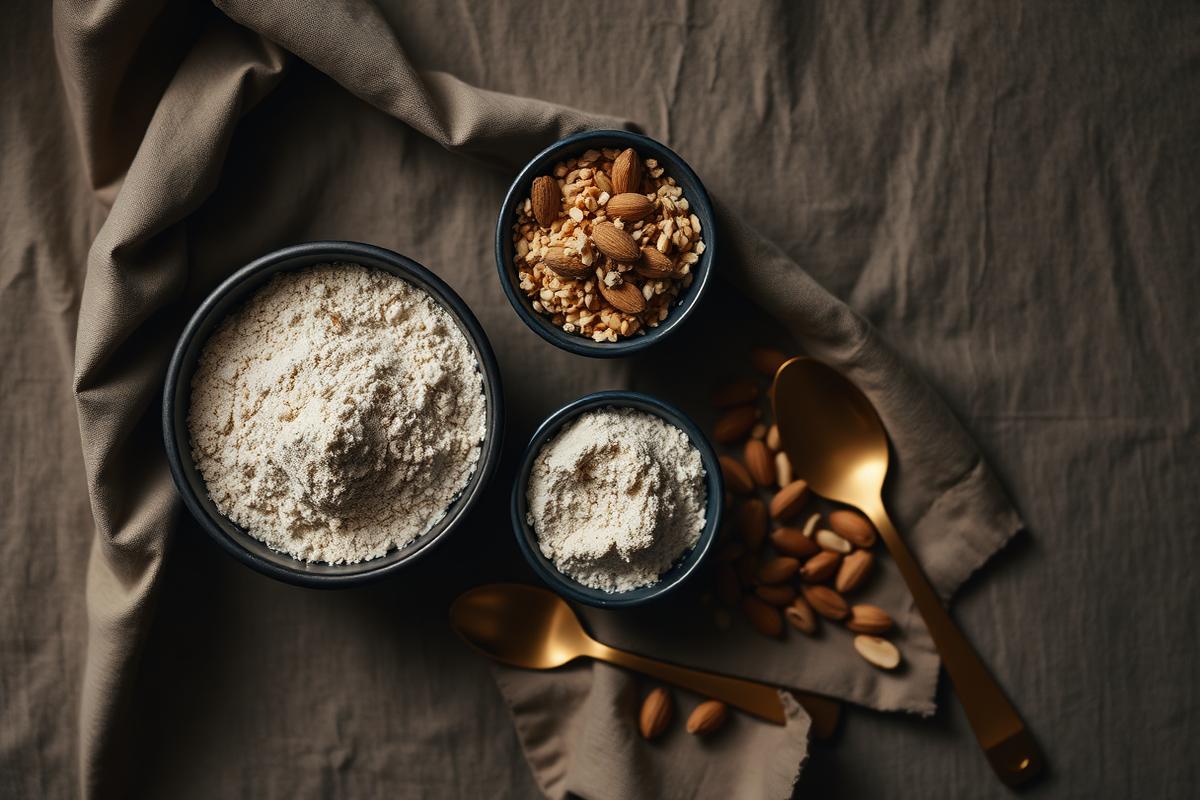
Almond meal — and its finely ground counterpart, almond flour — is made entirely from crushed raw or blanched almonds. Because it is naturally free of gluten and low in carbohydrates, it behaves very differently from wheat flour.
- Nutritional profile: packed with monounsaturated fats, plant-based protein, vitamin E and magnesium, with a significantly lower glycemic index for slow-release energy.
- Baking tip: almond meal lacks gluten, the structural glue of traditional baking — lean on eggs or natural binders, or blend it with another alternative flour.
- Moisture control: a small amount of coconut flour absorbs the extra fat and liquid almonds bring, preventing a greasy crumb.
Recipe: Almond Meal Berry Scones
Naturally gluten-free, lightly sweetened and bursting with antioxidants. Prep 15 minutes, bake 20 minutes, yields 6 scones. Whisk 2 cups fine almond meal with 1/4 cup coconut flour, 1 tsp baking powder and 1/2 tsp sea salt; separately whisk 2 eggs, 1/4 cup maple syrup, 1/4 cup melted coconut oil and 1 tsp vanilla. Combine into a thick dough, fold in 1/2 cup wild berries, shape a 6-inch disc, cut into six wedges and bake at 180°C for 18 to 20 minutes until golden and firm. Cool completely before serving — the full scalable version with macros and hands-free cook mode lives in the Mediterranean Vitality collection.
2. Baking with Wholemeal Flour: Fibre-Rich & Hearty
Wholemeal (or whole wheat) flour uses the entire grain — bran, germ and endosperm. It does contain gluten, but it retains the fibre, B vitamins and trace minerals that refined flours lose during processing.
- Nutritional profile: high in dietary fibre, which supports gut health, improves satiety and keeps digestion running smoothly.
- Baking tip: wholemeal flour absorbs more liquid and bakes heavier — pair it with a portion of unbleached flour, or rest the dough longer so the bran fully hydrates.
- Flavour: stoneground spelt brings a gentle sweetness and a softer gluten than modern wheat, making it forgiving for first-time bakers.
Recipe: Wholemeal Spelt & Seed Artisan Loaf
A dense, satisfying, high-fibre loaf for morning toast or hearty sandwiches. Prep 20 minutes plus an hour rising, bake 35 minutes, yields one standard loaf. Bloom 1 tsp active dry yeast with 1 1/4 cups lukewarm water and 1 tbsp raw honey for five minutes, then stir in 2 tbsp olive oil, 1.5 tsp sea salt, 3 cups wholemeal spelt flour and 3 tbsp mixed seeds. Knead five to seven minutes, prove one hour until doubled, shape into a lined tin, top with extra seeds and bake at 190°C for 35 to 40 minutes until the base sounds hollow. Cool on a wire rack before slicing.
Choosing Between Them
Reach for almond meal when blood sugar stability, gluten avoidance or a tender, cake-like crumb is the priority. Reach for wholemeal spelt when you want structure, chew and fibre — breads, flatbreads and rustic tarts. Many of the best bakes use both: a spelt base for architecture and almond meal for richness.
Both recipes are saved inside GeniusCook with scalable servings, live macro recalculation, hands-free cook mode and one-tap shopping list sync, so you can move from reading to baking without rewriting a single measurement.
Global Flavors, Clean Nutrition.
Explore the collection