November 22, 2026 · 5 min read · GeniusCook Journal
Blitva s Krumpirom — Croatian Chard and Potatoes with Simple Cooking Tips
Learn how to prepare authentic blitva s krumpirom, the quintessential Adriatic side dish combining tender potatoes, leafy Swiss chard, minced garlic, and olive oil.
The Classic Adriatic Side Dish
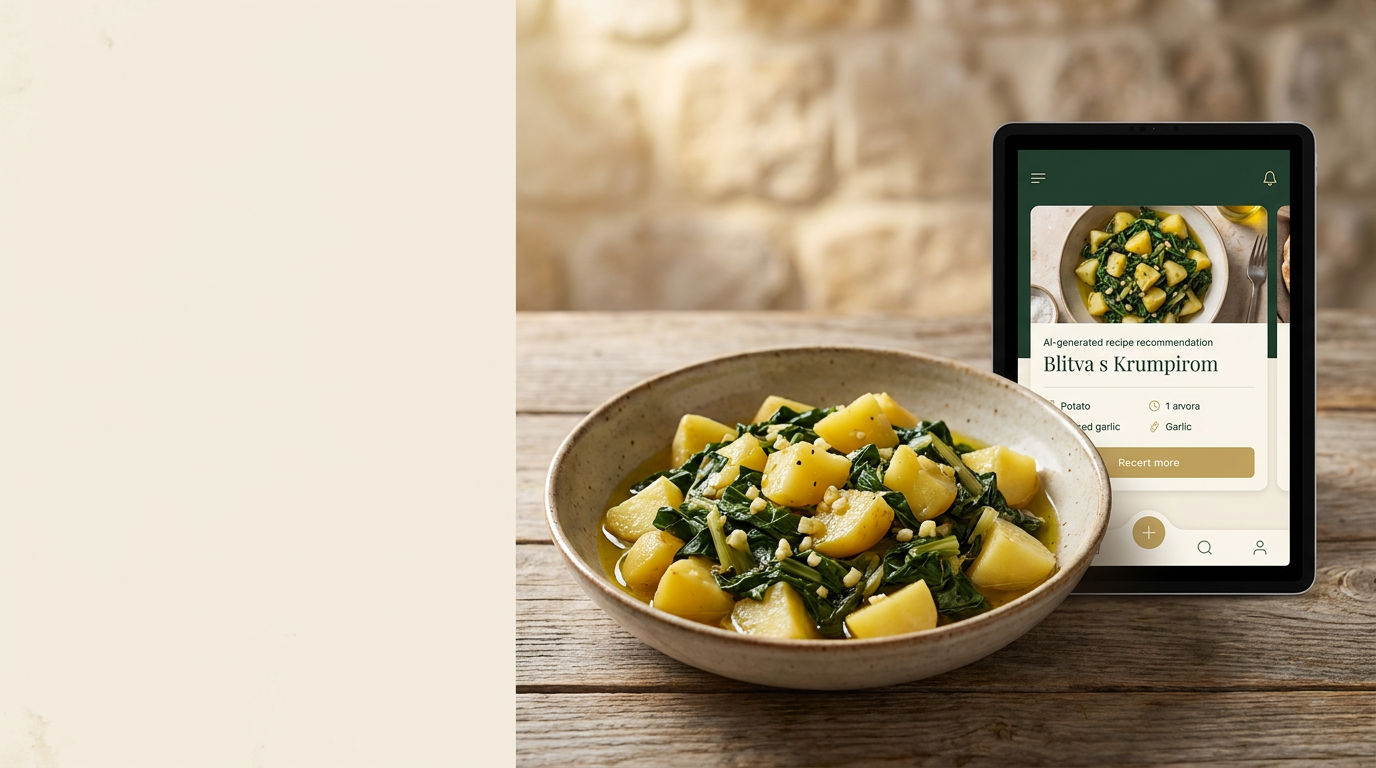
Blitva s krumpirom—frequently searched as blitva s krumpirom or simply blitva without accents—is the definitive coastal side dish across Dalmatia and the Croatian islands. At its core, the recipe brings together three elemental ingredients: waxy potatoes, fresh Swiss chard, and minced garlic warmed in olive oil. The preparation is rustic yet precise, relying on the natural sweetness of boiled potatoes to counterbalance the mild mineral edge of the greens. Whether accompanying fresh grilled sea bass along the Adriatic coast or served as a comforting weeknight staple at home, this dish relies entirely on technique and quality ingredients rather than complex seasoning. For a complete Adriatic seafood spread, it pairs naturally with Brudet or a grilled catch of the day.
Selecting and Prepping the Swiss Chard
Swiss chard, known locally as blitva, provides the deep green backbone of the dish. Look for bunches with thick, firm stems and vibrant, crisp leaves without yellowing edges. Because the fibrous stalks require longer cooking than the tender leafy tops, prep them with care. Trim the bottom centimeter of the stems, wash the leaves thoroughly in cold water to remove residual grit, and separate the stalks from the greens. Slice the stalks into uniform half-centimeter ribbons, and chop the leafy tops into broad ribbons roughly three to four centimeters wide. This separation ensures that the stems become pleasantly tender while the leaves retain their rich color and silky texture without breaking down completely.
Potato Selection and the Boiling Process
Selecting the right potato determines whether your blitva holds a clean, rustic drape or turns into heavy paste. Medium-starch varieties like Yukon Gold, Charlotte, or yellow potatoes work best because they hold their shape during boiling yet crush easily under a fork. Peel the potatoes and cut them into even two-to-three-centimeter cubes so they cook at a uniform pace. Drop them into cold, generously salted water and bring the pot to a steady rolling boil. A classic one-pot technique saves both time and cooking liquid: once the potatoes are five minutes from tender, drop in the sliced chard stems, followed by the leafy chard tops during the final two minutes of boiling.
The Garlic and Olive Oil Finish
The final dressing requires careful heat control to avoid bitterness. While the potatoes and chard drain thoroughly in a colander, warm generous amounts of good-quality olive oil in a wide, heavy-bottomed pan over low heat. Add finely sliced or minced garlic, cooking it gently just until fragrant and translucent—never browned, which introduces a harsh taste. Return the thoroughly drained potatoes and greens to the pan with the warm oil. Season with sea salt and cracked black pepper, then gently crush a portion of the potatoes against the bottom of the pan using a wooden spoon. This light crushing releases starch, binding the olive oil and remaining cooking moisture into a velvety, cohesive sauce.
Sensible Swaps and Regional Variations
While classic blitva s krumpirom remains standard along the coast, home cooks adapt the dish based on seasonal availability. If mature Swiss chard is not in season, flat-leaf spinach, beet greens, or cavolo nero can step in, though cooking times must be adjusted accordingly. Similar hearty combinations appear throughout the Balkans, such as Zelje s Krumpirom, which pairs cabbage with potatoes in a comparable rustic style. Some coastal cooks finish the warm dish with a light squeeze of fresh lemon juice or a few drops of red wine vinegar to cut the rich oil, while others stir in a handful of chopped flat-leaf parsley just before serving. You can also explore our dedicated Blitva s Krumpirom guide for step-by-step measurements.
Serving and Storing Recommendations
Serve blitva s krumpirom warm or at room temperature, making it exceptionally versatile for family lunches and dinner gatherings. It stands beside grilled whole fish, pan-fried whitefish fillets, roasted lamb, or grilled sausages. A final drizzle of robust green olive oil poured over the plated dish just before bringing it to the table lifts the earthy aroma. Leftovers keep well in an airtight glass container in the refrigerator for up to three days. To reheat, avoid high microwave heat, which can make the greens watery; instead, warm the mixture gently in a wide skillet over medium-low heat with an extra splash of olive oil until heated through.
Cook it on GeniusCook
Got ingredients but no plan? Type what's in your fridge and get a recipe with a shopping list — first recipe free, no account needed. Try the free What Can I Make? recipe tool
Explore Genius Kitchen
Frequently asked questions
Why is my blitva s krumpirom watery?
Blitva becomes watery when boiled chard and potatoes are not drained thoroughly before being tossed with olive oil. Press the greens lightly against the colander with the back of a spoon to extract excess liquid before combining.
Can I use frozen Swiss chard for blitva s krumpirom?
Yes, frozen chard works when fresh chard is unavailable. Thaw it completely and squeeze out all excess moisture before adding it to the boiled potatoes and warm garlic oil.
Should the potatoes be fully mashed or left in chunks?
Authentic blitva s krumpirom features a mix of textures. The potatoes should be tender chunks with only a portion lightly crushed with a wooden spoon or fork to create a cohesive texture.
What fish pairs best with blitva s krumpirom?
Grilled white fish such as sea bass (brancin), sea bream (orada), or dentex are classic coastal pairings. It also works well with grilled squid, sardines, or fish stews.
Related reading
Global Flavors, Clean Nutrition.
Explore the collection