September 15, 2026 · 5 min read · GeniusCook Journal
Blue Zone Diet Meal Plan for Longevity: Practical Daily Menus and AI-Guided Prep
Discover how to structure an authentic, plant-forward weekly meal plan inspired by the world's longest-living populations, enhanced by modern culinary technology.
The Core Principles of Blue Zone Longevity Nutrition
The observational study of Blue Zones—regions such as Okinawa in Japan, Sardinia in Italy, Nicoya in Costa Rica, Ikaria in Greece, and Loma Linda in California—reveals striking dietary commonalities among individuals who reach 100 years of age at extraordinary rates. Rather than following restrictive commercial regimens, these populations consume localized, whole-food dietary patterns high in complex carbohydrates, fiber, and micronutrients. Plant foods comprise roughly 90 to 95 percent of their daily intake, with a heavy emphasis on legumes, leafy greens, root vegetables, and whole grains.
Caloric restraint is also integrated into daily eating patterns through cultural traditions like the Okinawan phrase 'Hara Hachi Bu,' a practice of stopping consumption when eighty percent full. Meals are eaten earlier in the day, with evening meals remaining the smallest. Incorporating these principles into contemporary home cooking requires focusing on nutrient density, culinary diversity, and sustainable daily habits rather than short-term dietary measures.
Structuring a Balanced Daily Blue Zone Menu
A typical day designed around longevity science emphasizes plant protein, healthy unsaturated fats, and unrefined grains. Breakfast frequently features slow-digesting whole grains, cooked beans, or steel-cut oats paired with nuts and seasonal fruits. Lunch serves as the primary fuel source for afternoon activity, highlighting robust legume salads, vegetable-rich soups, or grain bowls dressed with cold-pressed extra virgin olive oil.
Dinners are kept light and digestively manageable, prioritizing roasted root vegetables, braised greens, and modest portions of whole grains or plant-based proteins. Snacking is intentional, relying on handfuls of raw almonds or walnuts, fresh berries, or seed-based options rather than processed convenience products. Hydraulic hydration remains simple: water, herbal teas such as rosemary or dandelion root, and moderate coffee intake form the foundation.
A Sample 3-Day Longevity Meal Plan
Day One highlights Mediterranean longevity traditions. Breakfast consists of a warm bowl of farro topped with simmered figs, walnuts, and a drizzle of thyme honey. Lunch features an Ikarian stew of giant white beans (gigantes plaki) braised with tomatoes, garlic, extra virgin olive oil, and wild greens, served alongside sourdough bread. Dinner concludes with a light roasted zucchini and lemon soup accompanied by a simple arugula and seed salad.
Day Two draws inspiration from Okinawan and Central American traditions. Morning meal includes steamed purple sweet potato served alongside braised edamame and green tea. Lunch centers around a Nicoyan black bean and brown rice bowl topped with avocado, diced tomatoes, and fresh cilantro. Dinner features a fragrant vegetable curry cooked with turmeric, squash, chickpeas, and leafy greens, served over a modest portion of wild rice.
Essential Ingredients for Your Longevity Pantry
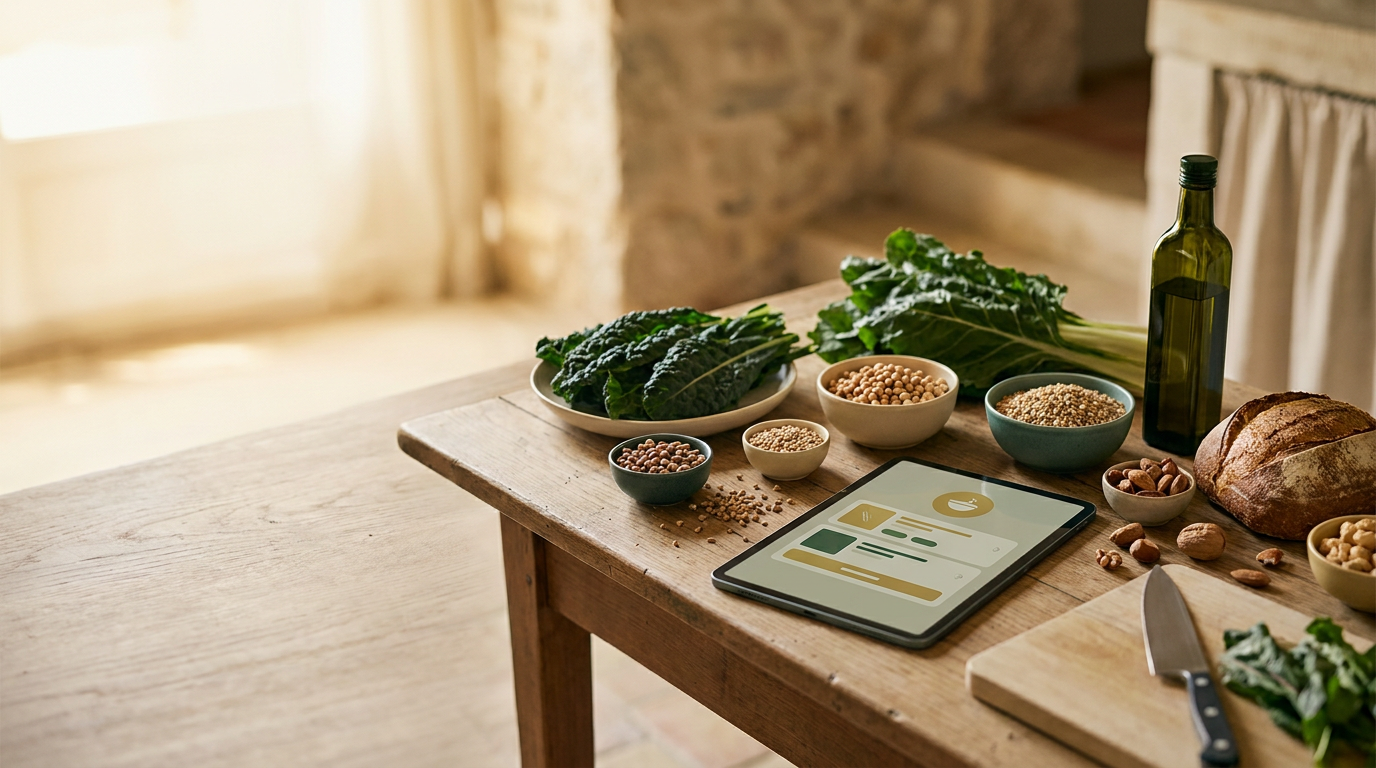
Building a kitchen stocked with longevity-focused ingredients simplifies daily meal preparation. The primary foundation includes legumes such as chickpeas, lentils, black beans, and fava beans. These staples provide a high-fiber combination of protein and complex carbohydrates that stabilize blood glucose levels and nourish beneficial gut microbes.
Secondary essentials comprise cold-pressed extra virgin olive oil, diverse nuts (walnuts, almonds, pistachios), whole seeds (flax, chia, pumpkin), and aromatic herbs rich in polyphenols. Whole grains like barley, farro, quinoa, and authentic sourdough bread round out the pantry, offering sustained metabolic support.
Applying AI Precision to Longevity Meal Prep
Transitioning from dietary theory to consistent kitchen execution presents practical challenges. Smart culinary technology helps streamline meal planning by matching Blue Zone nutritional criteria with the specific ingredients already present in your kitchen. GeniusCook utilizes advanced algorithmic mapping to adjust recipe proportions, optimize micronutrient intake, and generate zero-waste meal schedules tailored to individual metabolic needs.
By leveraging automated pantry integration, users can automatically generate balanced weekly menus that eliminate ingredient waste and minimize prep time. The platform evaluates nutritional density across global recipe frameworks, allowing you to experience authentic regional preparations while strictly adhering to longevity guidelines.
Overcoming Common Meal Planning Barriers
Maintaining a consistent plant-forward routine requires overcoming practical hurdles such as meal prep duration and flavor fatigue. Batch cooking legumes and whole grains on weekends significantly reduces weeknight preparation time. Using acidic brightness from fresh citrus and wine vinegars alongside dried herbs adds rich flavor profiles without over-relying on sodium.
Variety is crucial for long-term adherence. Rotating regional flavor profiles—from Greek oregano and lemon preparations to Costa Rican cumin and pepper profiles—ensures daily menus remain satisfying, nutritious, and deeply satisfying over a lifetime.
Longevity nutrition is not about restriction; it is about establishing a lifelong rhythm centered around nourishing plant foods, shared meals, and culinary tradition.
Dr. Elena Vance, Director of Culinary Nutrition at GeniusCook
Pantry to Plate
Frequently asked questions
What is the Blue Zone diet, and how does it support longevity?
The Blue Zone dietary pattern is derived from five global regions with high concentrations of centenarians. It focuses on whole, plant-forward foods, high fiber, legumes, healthy fats, and minimal processed ingredients to support cardiovascular and metabolic health.
Do I need to be completely plant-based to follow a Blue Zone meal plan?
No. While Blue Zone populations consume primarily plant foods (90–95%), small amounts of fish, goat dairy, or lean proteins are traditionally eaten occasionally during social or ceremonial occasions.
How does GeniusCook assist in creating a Blue Zone meal plan?
GeniusCook uses AI to analyze your current pantry ingredients, building customized daily menus that match the precise macronutrient and fiber profiles of traditional Blue Zone diets while minimizing food waste.
What are the primary legumes recommended for a longevity diet?
Black beans, garbanzo beans (chickpeas), lentils, fava beans, and white kidney beans are central to traditional longevity diets worldwide.
Sources
- Buettner, D., & Skemp, S. (2016). Blue Zones: Lessons for Living Longer From the People Who've Lived the Longest. American Journal of Lifestyle Medicine, 10(5), 318–321.
- Pes, G. M., et al. (2015). Male longevity in Sardinia: The role of nutritional factors and physical activity. Nutrients, 7(5), 3645–3660.
- Willcox, D. C., et al. (2009). The Okinawan diet: robust nutritional tool for health and longevity. Journal of the American College of Nutrition, 28(sup4), 500S-516S.
Global Flavors, Clean Nutrition.
Explore the collection