November 26, 2026 · 6 min read · GeniusCook Journal
Štrukli — Zagreb’s Cheese Pastry at Home
Learn how to stretch tender pastry, fill it with fresh cheese and cream, and bake northern Croatia’s beloved comfort dish in your own oven.
Understanding Traditional Štrukli
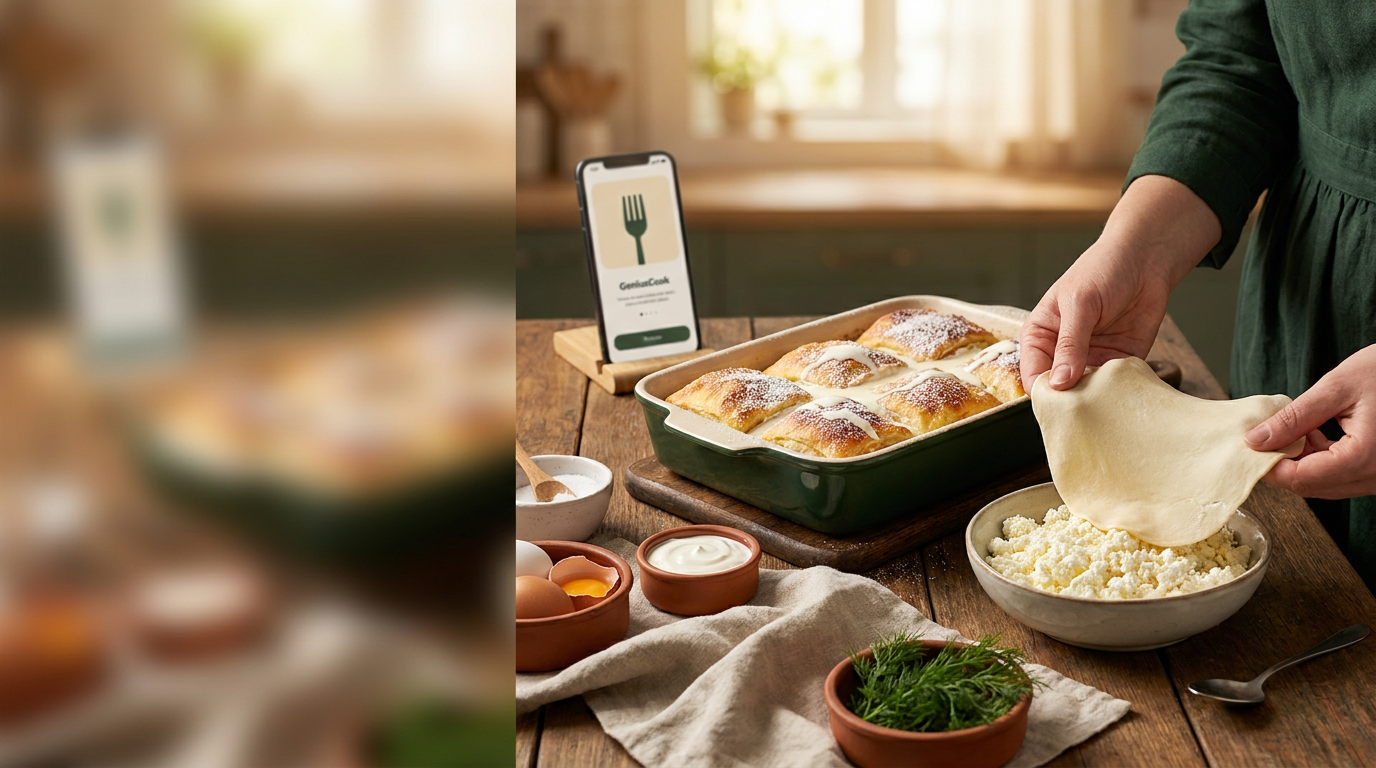
Štrukli, often searched simply as strukli by home cooks outside the region, is the signature pastry dish of Zagreb and the surrounding Hrvatsko Zagorje region. At its core, the dish consists of a soft, unleavened wheat dough stretched paper-thin over a table, filled with fresh crumbly cheese, eggs, and sour cream, rolled into a log, cut into individual pillows, and baked under a rich cream topping until golden and bubbling.
To make authentic štrukli at home, you do not need commercial pastry sheets or specialized bakery tools. Success comes down to understanding two foundational steps: allowing the simple dough to rest thoroughly so the gluten relaxes, and using the edge of a small ceramic plate rather than a knife to cut and seal each portion. Whether served as a hearty lunch or an afternoon bake, the technique is straightforward once you see how the layers assemble.
Key Ingredients and Simple Swaps
The dough requires only four basic pantry items: all-purpose or bread flour, lukewarm water, a pinch of salt, and a splash of neutral sunflower or vegetable oil. A well-hydrated, rested dough is what allows it to stretch across your workspace without tearing. Knead it until soft and supple, then brush the top with oil and let it rest at room temperature for at least thirty to forty-five minutes before handling.
The filling relies on traditional Croatian fresh curd cheese (svježi sir), which is mild, slightly tangy, and lightly drained. If you cannot find fresh curd cheese, whole-milk cottage cheese or pot cheese makes an outstanding substitute; simply press out excess liquid in a fine sieve so the filling remains creamy rather than watery. Beat the cheese with whole eggs, a generous scoop of sour cream, and salt. For sweet štrukli, you can add a spoon of sugar, but the classic savory cheese version remains the household standard.
Stretching the Dough by Hand
Cover a large kitchen table with a clean cotton tablecloth and dust it lightly with flour. Place your rested dough ball in the center and roll it out with a pin until it is about the size of a dinner plate. Brush the top with a thin film of melted butter or oil. Then, tuck your hands underneath the dough palms-down and gently walk backward around the table, using the backs of your hands and fingers to pull the dough outward from the center.
Continue easing the edges outward until the sheet covers most of the table and is thin enough to see the pattern of the cloth beneath it. If thick outer borders remain along the edges, gently tear or trim them away with kitchen scissors. Do not worry about minor tears in the center; the dough will be rolled several times over itself, which neatly conceals small imperfections.
Filling, Rolling, and Cutting the Pillows
Spoon the cheese mixture evenly along one long third of the stretched pastry sheet, leaving the remaining surface clear. Lightly flick melted butter or oil over the empty dough to ensure flaky, tender layers inside the roll. Next, lift the edge of the tablecloth along the filled side and let the cloth do the work: tilt it upward so the dough rolls forward over the filling into a long, continuous cylinder.
To cut the roll into individual štrukli, use the rim of an ordinary small ceramic saucer or dessert plate instead of a knife. Press down firmly with the plate edge every three to four inches. The rounded pressure cuts the dough while pinching and sealing the edges shut, ensuring the fresh cheese filling stays locked inside during cooking.
Baking to a Golden Finish
While štrukli can be gently simmered in salted water (kuhani štrukli) and tossed with butter-toasted breadcrumbs, the baked version (pečeni štrukli) is the most popular style for family tables. Arrange the cut pieces side by side in a buttered ceramic or cast-iron baking dish, packing them gently so they support each other as they rise.
Whisk together sour cream, a splash of heavy cream, and a pinch of salt, then pour this mixture generously over the pastry until the pieces are almost submerged. Bake at 200°C (400°F) for thirty to thirty-five minutes. The pastry absorbs the richness of the dairy, puffing softly in the center while the top forms a browned, blistered crust.
How to Serve Štrukli
Let the baking dish rest on the counter for ten minutes before serving to allow the bubbling cream and molten cheese to settle into clean spoonfuls. Serve warm directly from the pan. Štrukli can stand alone as a satisfying main meal alongside a crisp seasonal green salad, or serve as the savory centerpiece of a broader regional spread.
For a balanced northern Croatian menu, pair warm baked štrukli with vegetable dishes such as Zelje s Krumpirom — Croatian Cabbage & Potatoes, or alongside the tender braised peppers of Sataraš — Serbian Pepper & Tomato Stew with Eggs. Leftovers can be covered and refrigerated for up to two days; reheat them gently in a warm oven with a fresh spoonful of cream over top to restore their tenderness.
Cook it on GeniusCook
Got ingredients but no plan? Type what's in your fridge and get a recipe with a shopping list — first recipe free, no account needed. Try the free What Can I Make? recipe tool
Pantry to Plate
Frequently asked questions
What is the best cheese to use if I cannot find Croatian svježi sir?
Drained whole-milk cottage cheese, farmer's cheese, or a half-and-half mixture of drained ricotta and sour cream work best. Ensure the cheese is not overly wet before mixing.
Why is a plate used to cut štrukli instead of a chef's knife?
A dull ceramic rim crushes the dough layers together as it cuts, sealing the edges shut. A sharp knife blade slices cleanly through without pressing, allowing the melted filling to leak into the pan during baking.
Can I freeze homemade štrukli before baking?
Yes. Place the cut, unbaked štrukli on a parchment-lined baking sheet and freeze until solid. Transfer them to an airtight container. Bake directly from frozen, adding an extra ten minutes to the baking time and pouring the cream mixture over top just before the pan goes into the oven.
Related reading
Global Flavors, Clean Nutrition.
Explore the collection