October 7, 2026 · 5 min read · GeniusCook Journal
The Art of Low Calorie Nutrient Dense Meal Prep: Global Flavors for Sustained Energy
Transform your weekly batch cooking with micronutrient-rich ingredients, vibrant global spices, and intelligent meal planning tailored for metabolic health.
Redefining Meal Prep Through Micronutrient Density
Traditional approaches to batch cooking often prioritize sheer volume over nutritional quality, resulting in repetitive meals that lack culinary excitement. True vitality stems from selecting ingredients that provide exceptional micronutrient density—vitamins, minerals, antioxidants, and phytonutrients—per unit of energy. By focusing on nutrient density rather than restrictive energy tracking, your weekly preparation becomes an empowering ritual centered on cellular nourishment and sustained stamina.
Embracing high-density ingredients means prioritizing vibrant produce, whole legumes, and high-quality proteins that maintain their integrity across several days. Ingredients like Tuscan kale, roasted lentils, fermented vegetables, and wild-caught sea bass deliver dense nutritional profiles while keeping meals satisfying. This shift elevates routine prep into a sophisticated practice of culinary wellness.
The Architecture of a High-Density Prep Bowl
Building a balanced container requires an intentional framework. Start with a foundational base of dark cruciferous greens or fiber-rich intact grains such as black barley or quinoa. Layer in diverse colorful vegetables—roasted purple sweet potatoes, charred peppers, and golden beets—which supply a spectrum of carotenoids and polyphenols. These plant compounds support cellular defense and metabolic resilience throughout your busy work week.
Complete your prep bowl with high-efficiency proteins like spiced chickpeas, herb-marinated chicken breast, or baked organic tofu. To tie the elements together without heavy saturated fats, craft cold-pressed emulsified dressings infused with fresh herbs, tahini, Meyer lemon juice, or extra virgin olive oil. This balanced composition keeps your energy steady and prevents the mid-afternoon slump.
Global Flavor Profiles That Preserve Freshness
Monotony is the enemy of consistent home cooking. Utilizing global spice blends allows you to craft deeply aromatic dishes without adding excess sodium or heavy sauces. Middle Eastern za'atar, Japanese shichimi togarashi, North African harissa, and Mexican achiote bring robust flavor dimensions that actually improve after a day or two in the refrigerator as flavors meld.
Acid is equally crucial for long-lasting meal prep vitality. Incorporating fresh lime, pomegranate molasses, or artisanal vinegars late in the cooking process brightens rich roots and leguminous bases. The combination of warm spices and targeted acidity ensures that day-four prepped lunches taste as crisp and intentional as those consumed straight from the pan.
Precision Cooking Techniques for Optimal Retention
Heat can alter both the texture and nutritional availability of your prepped ingredients. High-heat flash roasting preserves the structural integrity and moisture of vegetables like broccolini and bell peppers while caramelizing natural sugars. Meanwhile, gentle poaching or steam-baking preserves delicate proteins without introducing unwanted oxidized oils or toughening meat fibers.
For legumes and sturdy grains, slow simmering with aromatics like bay leaves, garlic cloves, and kombu sea vegetable softens fibers while improving digestibility. Staggering your cooking methods during a single prep session optimizes kitchen efficiency, filling your refrigerator with components that reheat evenly without turning soggy or dry.
Harnessing AI for Dynamic Kitchen Efficiency
Modern kitchen technology simplifies the complex math of nutrient optimization. The GeniusCook platform analyzes your available pantry items, cross-referencing regional flavor profiles with your personal wellness targets. Instead of spending hours planning, the app generates automated prep timelines, precise ingredient scaling, and customized reheating guides designed to maximize flavor and micronutrient retention.
By dynamically adjusting recipes based on seasonal produce and kitchen stock, AI transforms batch cooking into an adaptive, zero-waste system. You gain access to curated culinary techniques that elevate humble root vegetables and lean proteins into restaurant-quality preparations engineered for longevity and effortless daily dining.
Storage Science and Micronutrient Integrity
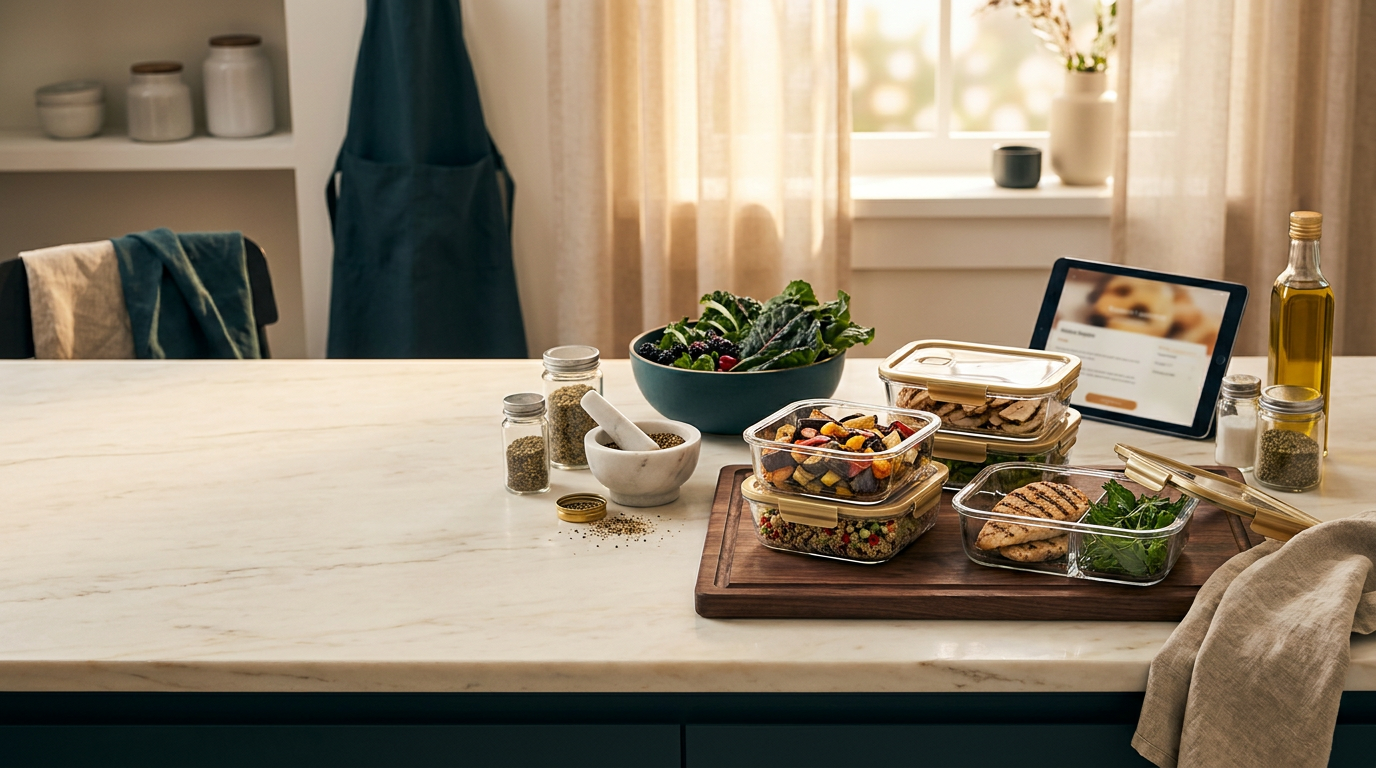
How you store prepped components significantly impacts their cellular freshness and flavor profile over time. Glass container systems with silicone seals protect sensitive nutrients from oxidation far better than standard plastic containers. Storing dressings, delicate greens, and cooked components in separate compartments preserves crisp textures and prevents premature sogginess.
To maintain peak vitality, cool cooked items rapidly to room temperature before sealing and chilling to prevent excess condensation inside the container. Consuming water-rich raw elements within three days while reserving sturdy grain and root bases for later in the week ensures optimal texture, flavor, and micronutrient retention through Friday.
Sustainable nutrition is not about restriction; it is about saturating your plate with color, global aromatics, and biological value.
Dr. Elena Rostova, Integrative Culinary Scientist
Pantry to Plate
Frequently asked questions
What is the difference between energy density and nutrient density in meal prep?
Energy density refers to the number of calories relative to the weight of food, whereas nutrient density measures the concentration of essential vitamins, minerals, antioxidants, and phytonutrients. Focusing on high nutrient density allows you to consume satisfying, voluminous meals that support biological longevity while managing overall intake.
How does GeniusCook assist with low calorie nutrient dense meal prep?
GeniusCook leverages AI to analyze your pantry, suggest globally inspired recipes based on micronutrient profiles, and generate step-by-step batch cooking plans. It optimizes ingredient pairings to maximize nutrient absorption and minimizes kitchen time with synchronized prep schedules.
How long can high-nutrient prepped meals safely stay fresh in the fridge?
Most cooked grains, legumes, and roasted vegetables retain peak flavor and nutritional quality for 4 to 5 days when stored in airtight glass containers. Delicate greens and cold-pressed sauces should be stored separately and combined just before serving to preserve crispness.
Sources
- Harvard T.H. Chan School of Public Health: The Nutrition Source - Phytonutrients and Health Outcome Benefits.
- Journal of Food Science and Technology: Impact of Domestic Cooking Methods on Micronutrient Retention in Vegetables.
Related reading
Global Flavors, Clean Nutrition.
Explore the collection