November 19, 2026 · 5 min read · GeniusCook Journal
Đuveč — Balkan Baked Vegetable Rice
A classic oven-baked casserole of tender long-grain rice, sweet peppers, tomatoes, and aromatics simmered in rich stock.
What Is Đuveč?
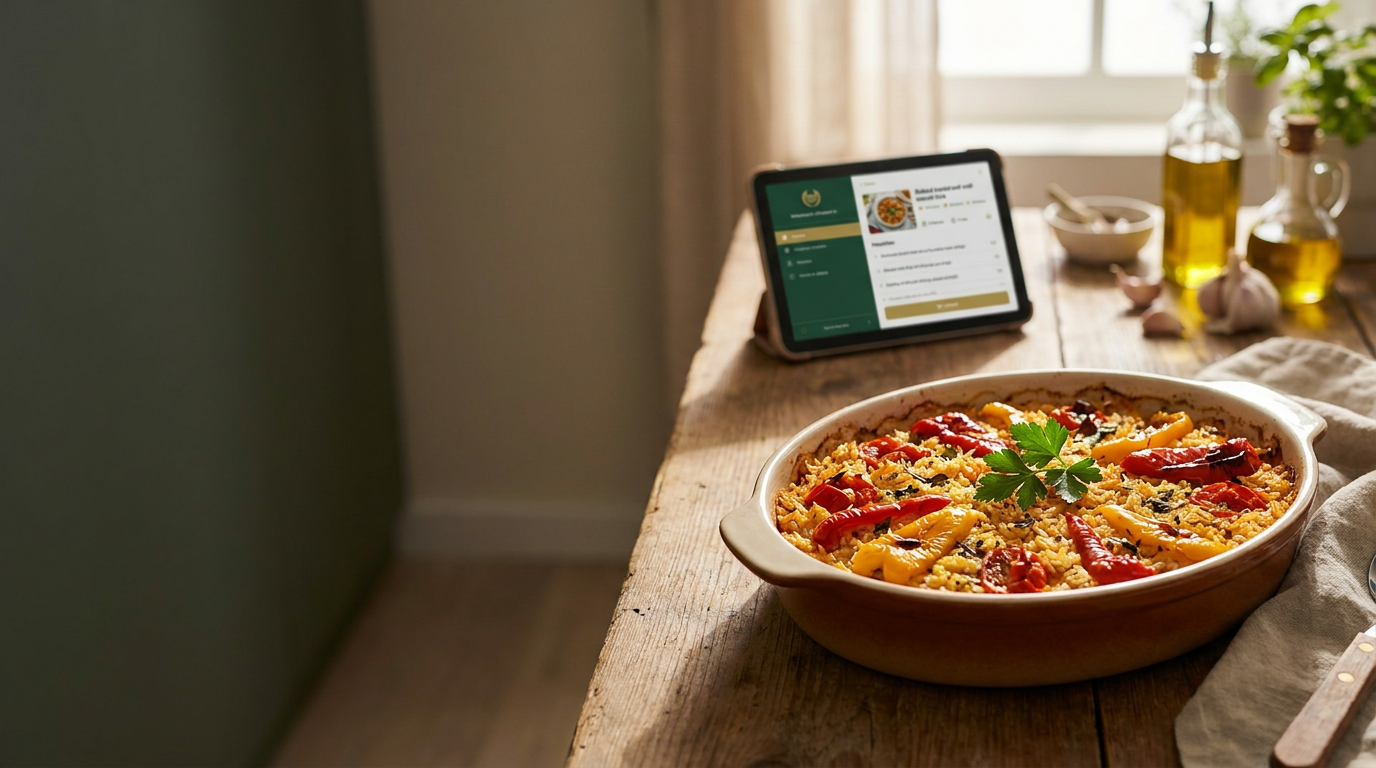
Đuveč is a traditional Balkan oven-baked dish built on a foundation of long-grain rice, ripe tomatoes, peppers, and onions cooked slowly in seasoned broth until the grains turn tender and aromatic. Home cooks across the region often type the name simply as djuvec or djuvech when searching for the recipe. The dish takes its name from the earthenware baking vessel in which it was historically prepared, though an ordinary roasting pan or heavy casserole dish in a modern oven produces the exact same comforting result.
While some households incorporate cuts of pork, beef, or poultry, the meatless version stands on its own merits as a staple family lunch or centerpiece side dish. It shares a deep kinship with other slow-cooked vegetable foundations across the Balkan peninsula, such as Sataraš, and offers a distinct regional approach to grain bakes comparable to the Maltese Ross il-Forn.
Essential Ingredients and the Base Flavor
At its core, a good djuvec relies on seasonal summer produce cooked down patiently. Sweet pointed peppers or bell peppers, yellow onions, and ripe tomatoes provide the bulk of the vegetable base. Minced garlic, sweet paprika, and sunflower oil or lard form the traditional aromatic base, bringing a warm reddish hue and a rounded aroma to the grains as they bake.
The choice of rice determines the finished texture. Medium or long-grain white rice works best because it absorbs large volumes of savory vegetable liquor without collapsing into a mushy paste. Green peas, diced zucchini, and tender green beans are standard vegetable additions that introduce varied texture and natural sweetness throughout the pan.
Step-by-Step Cooking Method
Preparation begins on the stovetop. Diced onions are gently sweated in oil until translucent, followed by sliced peppers and garlic. Once the vegetables soften, sweet paprika is stirred in briefly over low heat to release its fragrant oils without scorching. Chopped tomatoes are then added to release their juices, creating a rich sauce that coats the remaining vegetables.
The raw, rinsed rice is folded directly into the vegetable mixture, coating every grain in the tomato-paprika base. The entire mixture is then transferred to a baking dish, submerged in warm vegetable or meat stock, and baked uncovered at 190°C (375°F) until the liquid is fully absorbed, the rice is tender, and a lightly crisped crust forms along the surface.
Liquid Ratios and Baking Mechanics
Getting the liquid ratio right is the key to an authentic texture. Unlike a stovetop pilaf, djuvec bakes in an open dish where moisture evaporates continuously as the vegetables break down. A ratio of approximately three to three-and-a-half parts liquid to one part rice accounts for both the absorption of the grains and the moisture released by tomatoes and courgettes.
Avoid covering the pan with foil for the entire bake. Leaving the top exposed allows the starch on the surface to dry slightly, developing the characteristic roasted edges that define proper Balkan oven cookery. If the rice looks dry before the grains are fully cooked through, ladle a few extra tablespoons of hot stock over the surface.
Practical Swaps and Kitchen Variations
When fresh summer tomatoes are out of season, canned whole peeled tomatoes crushed by hand offer reliable acidity and deep color. Frozen green peas and chopped green beans can be stirred into the mixture without thawing beforehand, making this dish straightforward to prepare throughout the winter months.
If you prefer to cook with meat, cubes of pork neck, chicken thighs, or beef chuck can be seared in the pan before the aromatics are softened, then nestled deep into the rice before baking. You can also tailor the spice profile by adding cracked black pepper, a touch of hot paprika, or a sprig of fresh flat-leaf parsley stirred in just before serving.
How to Serve and Store Đuveč
Đuveč should rest for ten to fifteen minutes after leaving the oven. This brief pause allows the rice grains to settle and reabsorb remaining surface steam, making the dish easier to scoop without losing its structure. It is traditionally served warm or at room temperature alongside a crisp, salted cabbage salad, pickled peppers, or thick slices of rustic crusty bread.
Leftovers keep exceptionally well in an airtight glass container in the refrigerator for up to three days. To reheat, warm the rice gently in a covered pan with two tablespoons of water or broth to restore moisture, or bake it in a moderate oven until heated through.
Cook it on GeniusCook
Got ingredients but no plan? Type what's in your fridge and get a recipe with a shopping list — first recipe free, no account needed. Try the free What Can I Make? recipe tool
Pantry to Plate
Frequently asked questions
What is the difference between djuvec and regular vegetable pilaf?
A pilaf is typically cooked tightly covered on the stovetop until the liquid absorbs, leaving dry, separated grains. Đuveč is assembled with a higher ratio of fresh vegetables and stock, then baked uncovered in the oven so the grains absorb rich vegetable juices while developing a lightly browned crust on top.
Can I use brown rice instead of white rice for djuvec?
Brown rice can be used, but it requires significantly more liquid and a longer baking time. You will need to increase the stock by about fifty percent and cover the baking dish with foil for the first thirty minutes to ensure the outer bran layer softens properly.
Why did my djuvec turn out soggy?
Sogginess usually occurs when watery vegetables release excess moisture without enough baking time for evaporation, or if the rice was overcooked before the dish entered the oven. Stirring the raw rice directly into the vegetable base and baking uncovered ensures the grains cook through while remaining distinct.
Can djuvec be prepared ahead of time?
Yes. You can cook the aromatic vegetable base a day in advance and store it in the refrigerator. When ready to bake, combine the vegetable base with the rinsed rice and hot stock in your baking dish, then proceed directly with baking.
Related reading
Global Flavors, Clean Nutrition.
Explore the collection