November 5, 2026 · 5 min read · GeniusCook Journal
Kapunata — Maltese Aubergine & Pepper Stew
Learn how to master Kapunata, Malta's iconic aubergine and pepper stew, featuring practical cooking techniques, sweet-savory flavor balancing, and serving ideas.
Understanding Maltese Kapunata
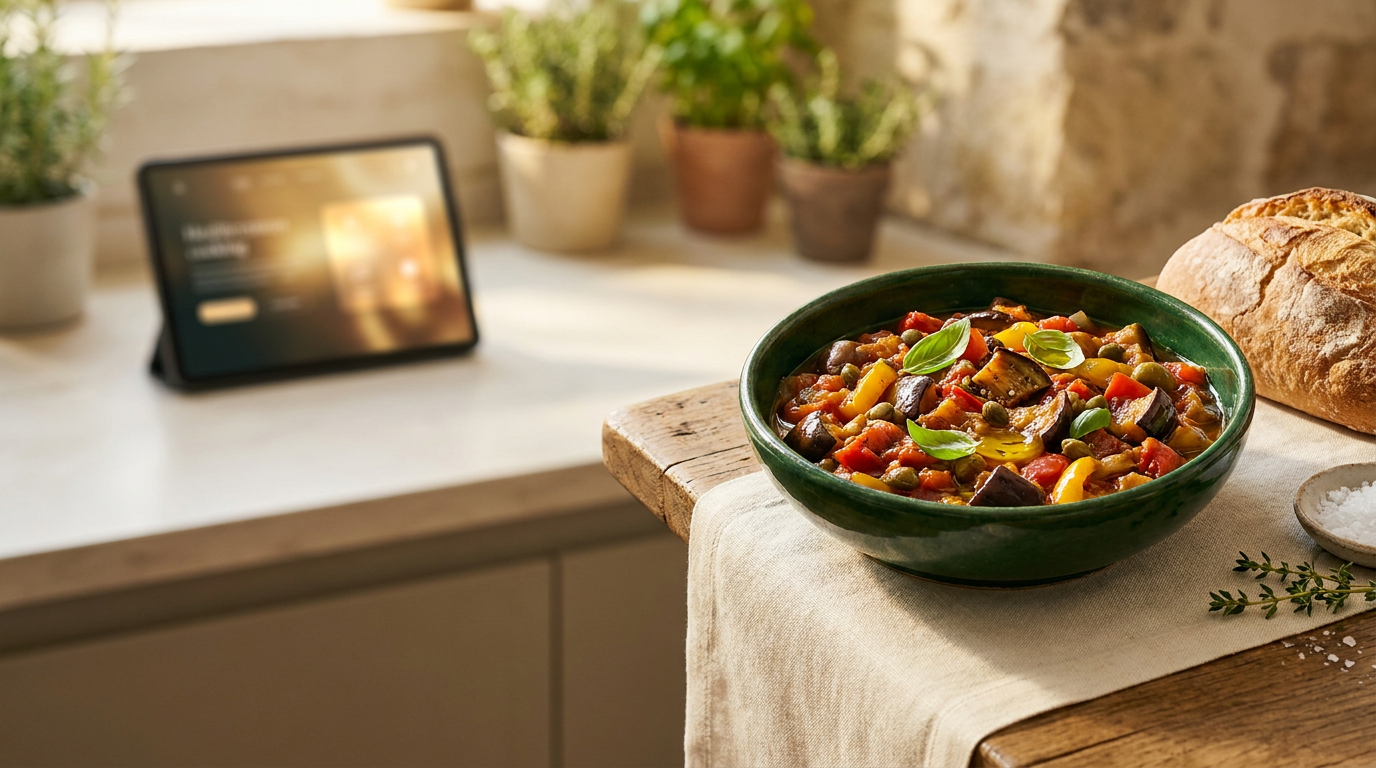
Kapunata is a foundational dish in Maltese home cooking, featuring a chunky mixture of aubergines, sweet bell peppers, tomatoes, capers, and olives. While similar summer vegetable stews exist across the Mediterranean region, Malta's version stands out for its balanced interplay of sweet, savory, and sharp briny notes. When searching for this dish online, cooks frequently look for the plain spelling kapunata without special characters, often comparing its style to Italian caponata.
The preparation relies on straightforward pan-cooking rather than long ingredient lists. Cubed aubergines are gently browned alongside peppers, onions, and garlic before joining ripe tomatoes, brine-cured olives, and salted capers in a single pot. Served warm straight from the stove, at room temperature, or chilled after sitting overnight, its versatility makes it a staple on island tables throughout the year.
Key Ingredients and Flavor Essentials
Firm aubergines form the backbone of a proper kapunata. Selecting aubergines with glossy skins ensures they hold their shape during frying and absorb the olive oil without turning mushy. Sweet bell peppers, ideally a mix of red and yellow, add structural contrast and natural sugars. Ripe plum tomatoes or high-quality canned crushed tomatoes create the rich base that binds the vegetables together.
Capers and green or black olives provide sharp briny pops throughout the stew, balancing the natural sweetness of cooked peppers and onions. Extra virgin olive oil acts as both the cooking medium and a flavor carrier, while a small splash of red wine vinegar near the end of cooking sharpens the sauce. Freshly chopped parsley added right before serving adds color and a clean, fresh finish.
Cooking Technique: Texture and Balance
Achieving the ideal texture requires attention to how each vegetable is cooked. Salting the cubed aubergine prior to cooking draws out excess water, ensuring the pieces brown cleanly in the pan instead of steaming. Cooking the aubergine and peppers in separate batches prevents overcrowding, allowing each vegetable to develop color and deep flavor before combining.
Once all ingredients are gathered in the pot with the tomato sauce, reduce the heat to a steady simmer. The goal is to cook the stew until the aubergine becomes soft and silky while the peppers maintain a gentle bite. Simmering uncovered for roughly twenty minutes thickens the tomato base so it coats the vegetables cleanly rather than turning watery.
Sensible Swaps and Regional Counterparts
While aubergine and bell pepper are traditional, flexible home cooking allows for simple adjustments based on what you have available. Courgettes can be added alongside peppers for extra volume. If capers taste too sharp for your preference, chopped green olives can be adjusted to balance acidity without losing the dish's distinct character.
Exploring regional vegetable stews reveals interesting comparisons across traditional home cooking. For instance, comparing kapunata to regional classics like [Sataraš — Serbian Pepper & Tomato Stew with Eggs](https://geniuscook.app/recipe/balkan-satarash) shows how neighboring food traditions build flavor around sweet peppers and tomatoes. For step-by-step instructions on the classic Maltese method, follow our complete recipe for [Kapunata — Maltese Aubergine & Pepper Stew](https://geniuscook.app/recipe/maltese-kapunata).
How to Serve Kapunata
Kapunata shines when served at room temperature, allowing the olive oil, vinegar, and caper flavors to fully integrate with the vegetables. It is traditionally presented alongside thick slices of crusty sourdough bread, ideal for scooping up the thick tomato sauce. It also functions wonderfully as a side dish for grilled fish, pan-seared meats, or roasted poultry.
Serving kapunata as part of a traditional bread platter alongside [Ħobż biż-Żejt — Maltese Bread with Oil & Tomato](https://geniuscook.app/recipe/maltese-hobz-biz-zejt) delivers an authentic taste of local Maltese dining customs. Hard-boiled eggs or canned tuna can also be mixed into the stew during the last few minutes of warming to turn it into a substantial lunch.
Storage and Make-Ahead Preparation
Storing kapunata in the refrigerator actually improves its flavor profile over time. Transfer cooled leftovers into an airtight glass container and store for up to four days. As the stew rests, the capers, olives, and tomato sauce seep deeper into the aubergine, creating a cohesive and smooth taste on the second day.
To serve leftovers, bring the stew back to room temperature naturally on the counter or warm it gently over low heat in a skillet. Freezing is possible, though aubergines tend to soften further upon thawing. If freezing, consume within one month and reheat slowly over medium heat to allow any excess moisture to evaporate.
Cook it on GeniusCook
- Kapunata — Maltese Aubergine & Pepper Stew
- Ħobż biż-Żejt — Maltese Bread with Oil & Tomato
- Sataraš — Serbian Pepper & Tomato Stew with Eggs
Got ingredients but no plan? Type what's in your fridge and get a recipe with a shopping list — first recipe free, no account needed. Try the free What Can I Make? recipe tool
Pantry to Plate
Frequently asked questions
What is the main difference between kapunata and Sicilian caponata?
Maltese kapunata generally relies on a simpler vegetable base of aubergines, bell peppers, tomatoes, olives, and capers simmered until soft. Sicilian caponata often includes added sugar, pine nuts, and raisins to create a more distinct sweet-and-sour (agrodolce) sauce.
Can I make kapunata without frying the vegetables first?
While pan-frying aubergine and peppers gives the dish its classic rich texture, you can roast the cubed vegetables on a baking sheet with olive oil before simmering them in the tomato sauce for a simpler cleanup.
Is kapunata served hot or cold?
Kapunata can be served warm, at room temperature, or chilled. Many Maltese home cooks prefer serving it at room temperature, as this highlights the savory flavor of the olive oil and briny capers.
How long does home-cooked kapunata last in the fridge?
When stored in an airtight container in the refrigerator, kapunata keeps well for up to four days. The flavors often deepen and improve after 24 hours.
Related reading
Global Flavors, Clean Nutrition.
Explore the collection