October 26, 2026 · 6 min read · GeniusCook Journal
Okinawan Diet Recipes for Healthy Longevity: Nourishing Staples from a Blue Zone
Discover traditional Okinawan culinary wisdom, essential longevity ingredients, and modern recipe adaptations that support lifelong vitality through balanced, plant-forward eating.
The Nutritional Wisdom of the Okinawan Table
Okinawa, Japan's southernmost prefecture, has long captivated longevity researchers due to its high concentration of healthy centenarians. Rather than relying on restrictive eating trends, traditional Okinawan dining relies on a high ratio of complex carbohydrates, vibrant vegetables, and moderate amounts of clean plant proteins. Staples like Beni Imo (purple sweet potatoes), bitter melon, sea vegetables, and fermented soy form the foundation of this centuries-old culinary pattern. By prioritizing phytonutrients, anti-inflammatory compounds, and essential minerals, traditional Okinawan meals foster systemic vitality while remaining deeply satisfying.
A defining principle of Okinawan dining culture is Hara Hachi Bu, a mindful practice of stopping when eighty percent full. This approach naturally supports metabolic efficiency and digestive ease without micromanagement or rigid tracking. Combining practical mindfulness with nutrient-dense botanical ingredients helps support cellular repair and cardiovascular wellness. Adapting these habits in modern kitchens allows home cooks to experience restorative meals rooted in authentic Blue Zone traditions.
Core Ingredients for Longevity Recipes
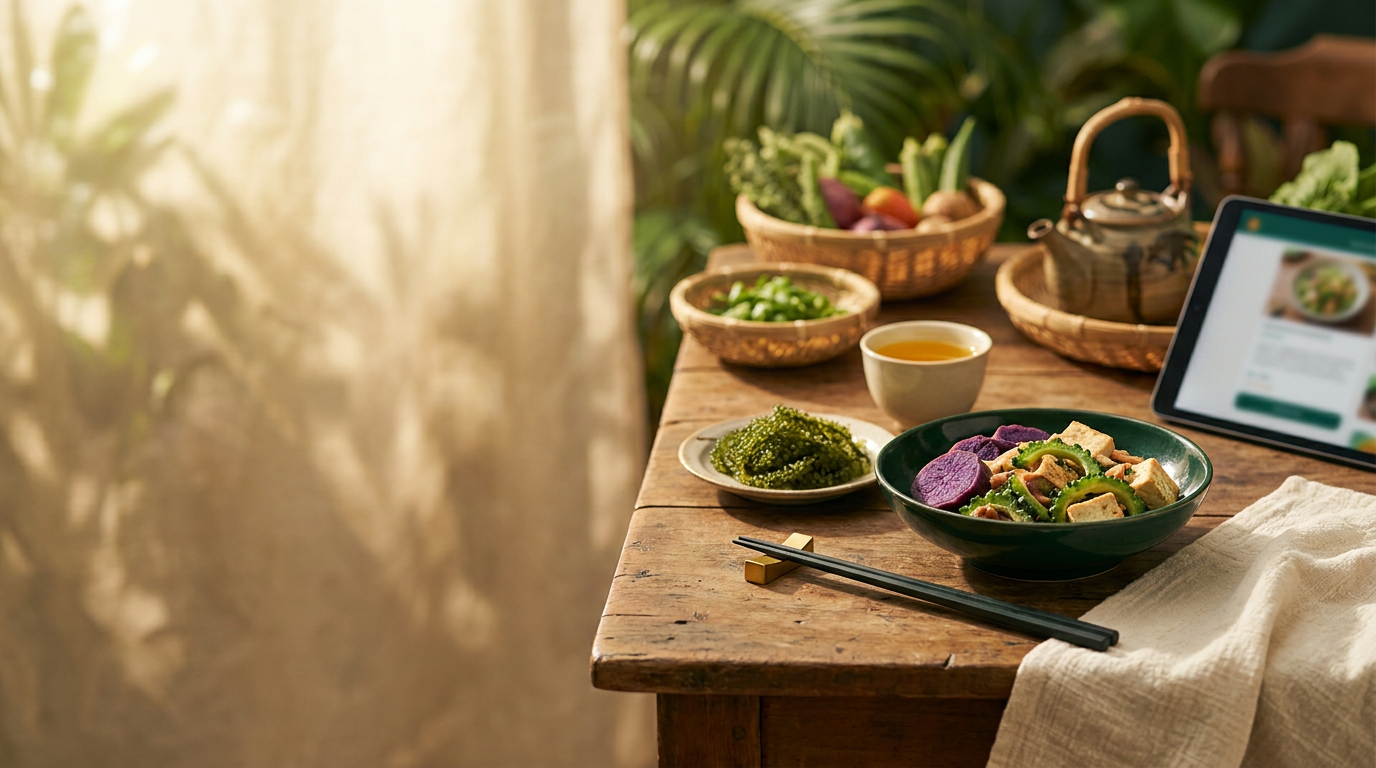
Recreating Okinawan diet recipes for healthy longevity requires understanding several key ingredients. The primary cornerstone of the traditional diet is the Okinawan sweet potato, celebrated for its rich purple flesh packed with anthocyanin antioxidants. Unlike standard potatoes, this purple root vegetable delivers steady, sustained energy along with a gentle glycemic response. Complementing the sweet potato is Goya, or bitter melon, renowned for its natural concentration of plant compounds that assist with balanced blood sugar regulation.
Other indispensable staples include firm tofu, shiitake mushrooms, kombu kelp, and fermented soy seasonings like miso. Sea vegetables contribute essential trace minerals, including iodine, magnesium, and folate, to daily soups and sautés. Together, these foods deliver a diverse array of dietary fiber, polyphenols, and micronutrients that nourish the gut microbiome and reinforce long-term metabolic health.
Goya Champuru: The Definitive Okinawan Stir-Fry
Among traditional regional recipes, Goya Champuru stands out as an enduring daily comfort dish. Translating to something mixed, Champuru combines thinly sliced bitter melon, pressed tofu, eggs, and occasionally small portions of sea vegetables or pork. The distinct bitter profile of Goya is balanced by quickly sautéeing it in toasted sesame oil and pairing it with umami-rich seasonings like dashi broth and soy sauce. The result is a vibrant, textured dish that offers robust metabolic support alongside complementary flavor layers.
Preparing authentic Goya Champuru at home is simple with modern kitchen adaptations. Slicing the bitter melon thinly and lightly salting it before cooking reduces sharp bitterness while retaining its crisp texture. Serving the dish alongside steamed brown rice or baked purple sweet potato creates a complete, anti-inflammatory meal rich in whole food nutrients and plant proteins.
Simmered Sweet Potatoes and Seaweed Soups
Warm, broth-based soups form the daily backbone of traditional Okinawan meal planning. Asa Soup, crafted from green sea lettuce and clear vegetable dashi, offers a light yet nutrient-rich start to any dinner. Abundant in ocean minerals and antioxidants, this warm broth prepares the digestive system while delivering clean hydration. Similarly, simmered root vegetable dishes featuring lotus root, burdock, and purple sweet potato provide comforting warmth and fiber to sustain beneficial gut microbiota.
Incorporating these slow-simmered dishes into your weekly routine offers an effortless way to maintain high intake of active micronutrients. Preparing broth bases with kombu and dried shiitake mushrooms infuses meals with natural savory depth without relying on excess sodium. These cooking methods demonstrate how traditional culinary techniques maximize nutrient availability while elevating everyday home dining.
AI-Driven Recipe Adaptation for the Modern Kitchen
Integrating authentic regional recipes into busy weekly schedules can pose challenges when sourcing unique regional produce. The GeniusCook platform simplifies this transition by offering intelligent substitutions that preserve the nutritional integrity of Blue Zone diets. If fresh bitter melon or Okinawan sweet potatoes are unavailable nearby, smart recipe suggestions provide functional alternatives such as radicchio, kale, or standard purple sweet potatoes paired with calibrated cooking adjustments.
Using smart kitchen tools enables cooks to tailor meals based on personalized wellness goals, dietary preferences, and existing pantry items. Whether adjusting flavor profiles or pairing Okinawan staples with preferred protein sources, intelligent recipe guidance bridges the gap between historical dietary wisdom and modern lifestyle needs.
Sustainable Longevity Practices Beyond the Plate
While ingredient selection plays a central role in healthy aging, the Okinawan philosophy emphasizes that lifestyle context is equally essential. Sharing meals with family and community, enjoying daily physical movement, and cultivating a clear sense of purpose enhance the natural benefits of clean nutrition. Slowing down during mealtime enhances nutrient absorption and reduces everyday stress markers.
Adopting Okinawan culinary habits is not about strict rules, but about building an intentional, nourishing relationship with real food. By focusing on whole, colorful plant ingredients and mindful dining habits, you build a sustainable foundation for long-term health and vitality.
The Okinawan table teaches us that longevity is not achieved through restriction, but through a joyful celebration of unrefined, nutrient-dense plants and mindful dining.
Dr. Hiroshi Tanaka, Integrative Nutrition Researcher
Pantry to Plate
Frequently asked questions
What makes the Okinawan diet effective for healthy longevity?
The traditional Okinawan diet is rich in complex carbohydrates, fiber, and polyphenols while remaining low in saturated fats and refined sugars. Key staples like purple sweet potatoes, sea vegetables, and bitter melon provide antioxidants and anti-inflammatory compounds that support cellular health, metabolic balance, and longevity.
Can I make Okinawan recipes if I cannot find traditional Japanese ingredients?
Yes. While authentic ingredients like Beni Imo and Goya are ideal, accessible alternatives work well. GeniusCook provides AI-driven substitutions—such as using standard purple sweet potatoes, radicchio, or dark leafy greens—that maintain the dish's core nutritional benefits.
How does the principle of Hara Hachi Bu fit into modern meal preparation?
Hara Hachi Bu is the practice of eating until you are 80 percent full. Rather than measuring food strictly, this mindful habit encourages eating slowly and listening to internal satiety cues, promoting digestive ease and steady metabolic energy.
Are Okinawan longevity recipes suitable for plant-based diets?
Absolutely. The traditional Okinawan diet is naturally plant-forward, relying on legumes, tofu, sea vegetables, and root crops for the majority of daily sustenance. Small amounts of fish or poultry are historically optional accents rather than main components.
Sources
- Willcox, B. J., Willcox, D. C., & Suzuki, M. (2009). Okinawa's Blue Zone: Longevity lessons from the longest-living people. Journal of the American College of Nutrition, 28(sup4), 500S-516S.
- Sho, H. (2001). History and characteristics of Okinawan longevity food. Asia Pacific Journal of Clinical Nutrition, 10(2), 159-164.
- Todoriki, H., et al. (2004). The effects of traditional Okinawan food on metabolic health. Journal of Nutritional Science and Vitaminology, 50(4), 261-267.
Related reading
- Blue Zone Dinner Recipes for Anti-Aging: Nourishing Evening Meals Inspired by Longevity Hotspots
- Traditional Blue Zone Beans and Greens Recipes for Everyday Longevity
- Mediterranean Blue Zone Recipes for Beginners: A Simple Blueprint for Longevity
- How to Cook Blue Zone Longevity Meals for Lifelong Health
Global Flavors, Clean Nutrition.
Explore the collection